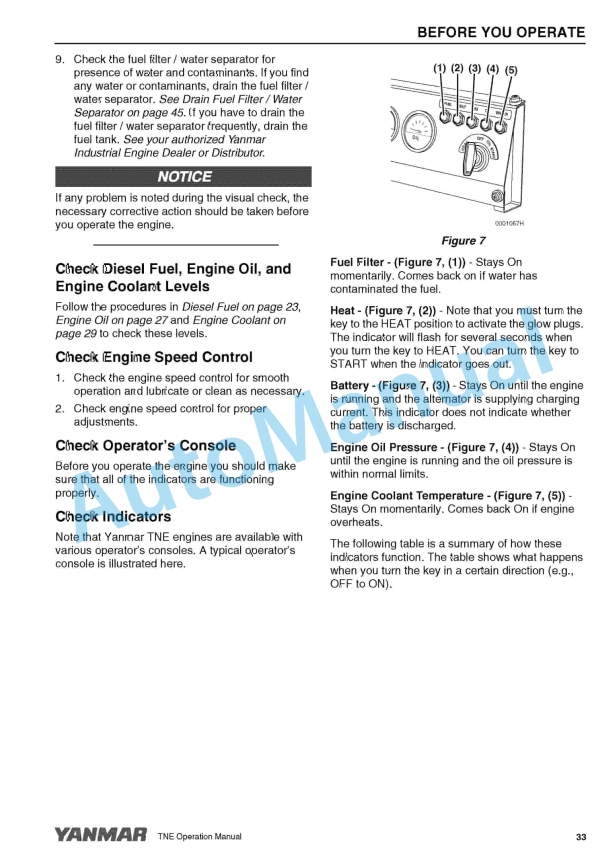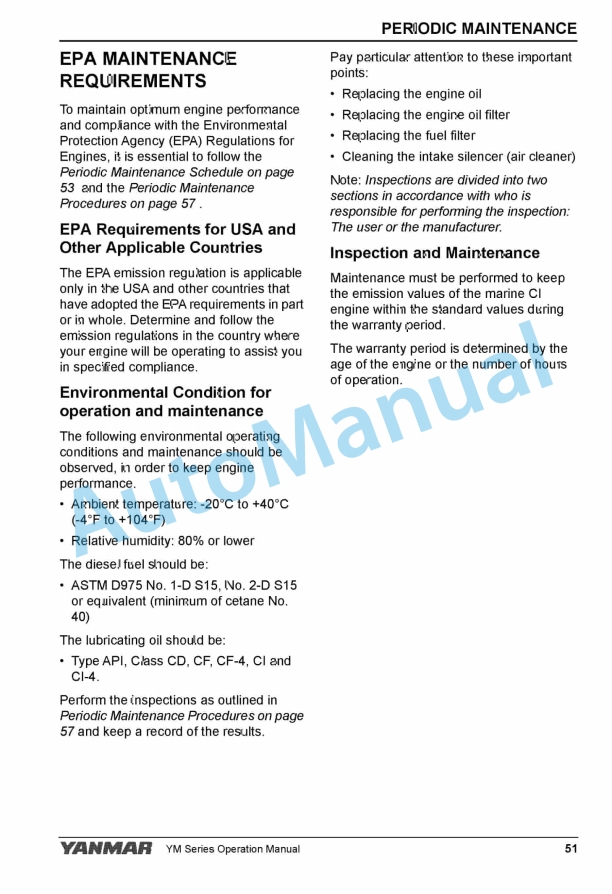
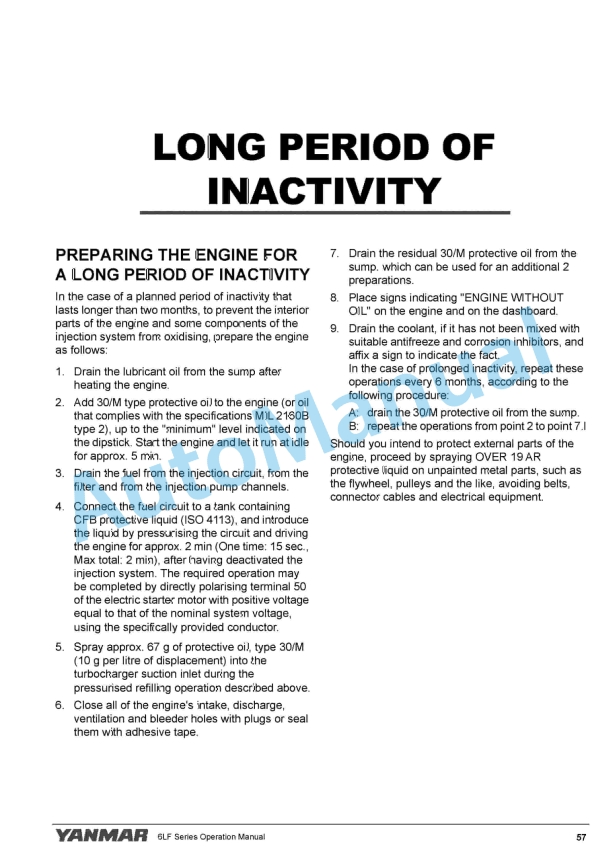
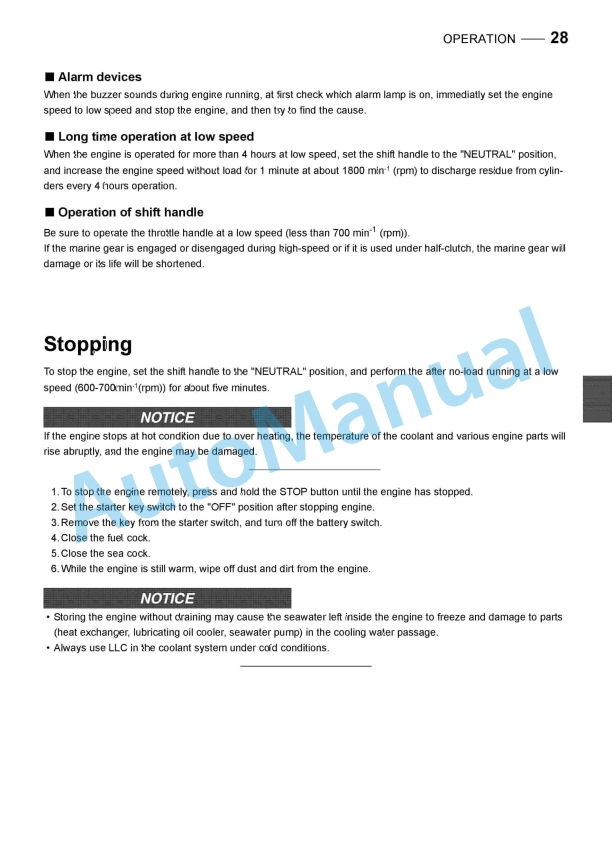
Yanmar 6LF485, 6LF530, 6LF550 Marine Engine Operation Manual
$20.00
- Type Of Manual: Operation Manual
- Number of Pages: 78
- Size: 2.1MB
- Format: PDF
Category: Yanmar Operator Manual PDF
-
Model List:
- 6LF485, 6LF530, 6LF550 Marine Engine
- 1. Table of Contents
- 2. Introduction
- 2.1. Record of Ownership
- 2.2. Safety Precautions
- 2.2.1. General Information
- 2.2.2. Before You Operate
- 2.2.3. During Operation and Maintenance
- 3. General Information
- 3.1. Principal Engine Specifications
- 3.2. YANMAR 6LF COMMON RAIL SERIES FEATURES AND APPLICATIONS
- 3.2.1. New Engine Break-In
- 3.3. Manufacturers declaration of power according to Directive 2013/53/UE – ISO8665
- 3.3.1. N67 404 kW (550 hp)
- 3.3.2. N67 390 kW (530 hp)
- 3.3.3. N67 353 kW (500 hp)
- 3.4. External View
- 3.4.1. Right side view
- 3.4.2. Left side view
- 3.4.3. Rear view
- 3.4.4. Front view
- 4. Engine Operation
- 4.1. For Proper Use Of The Engine
- 4.2. Preliminary Checks
- 4.3. Special Warnings
- 4.3.1. High coolant temperature
- 4.3.2. Low lubricant oil pressure
- 4.3.3. Presence of water in the fuel pre-filter
- 4.3.4. Clogged air filter and exhaust circuit inefficiencies
- 4.3.5. Alternator fault
- 4.3.6. Electrical system irregularities
- 4.3.7. Running in
- 4.4. Vessel Control System (VC20)
- 4.5. Starting the Engine (Start Up)
- 4.5.1. Station Protect
- 4.5.2. Sys on by ID, Start by ID
- 4.5.3. Owner ID Change
- 4.5.4. If the Engine Fails to Start
- 4.5.5. After the Engine has Started
- 4.6. Warm Up Mode (Shift Disconnect)
- 4.7. Throttle and Shift Control
- 4.7.1. Neutral
- 4.7.2. Forward
- 4.7.3. Reverse
- 4.7.4. Forward to Reverse or Reverse to Forward
- 4.8. Engine Speed Limit Mode
- 4.9. Cautions During Operation
- 4.10. Shut-Down the Engine (Stopping)
- 4.10.1. Normal Stopping
- 4.10.2. Emergency Stop
- 4.11. Emergency Operation
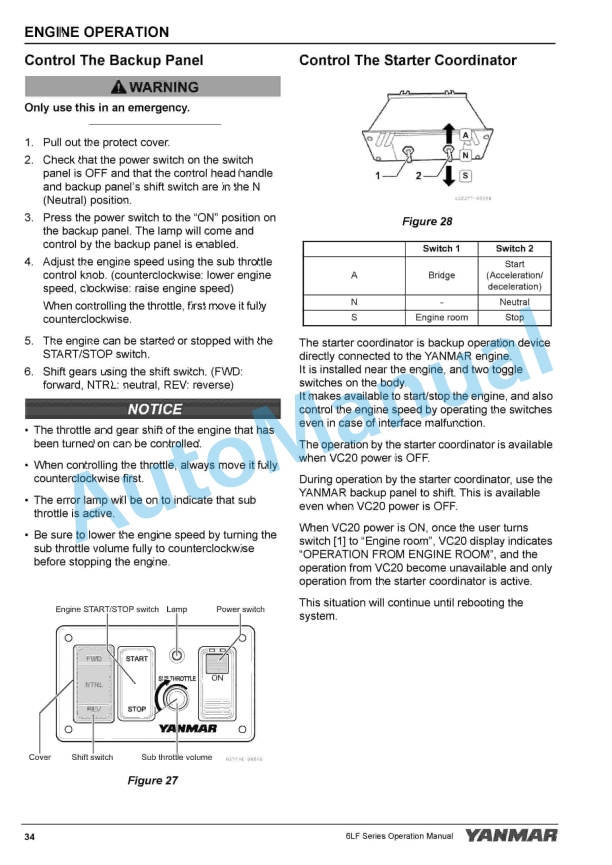
- 4.11.1. Control The Backup Panel
- 4.11.2. Control The Starter Coordinator
- 4.12. Checking the Engine After Operation
- 4.13. Refilling
- 4.13.1. Low temperature diesel
- 4.13.2. Inverter
- 5. Inspection and Maintenance
- 5.1. Introduction
- 5.2. Safety Precautions
- 5.3. Precautions
- 5.3.1. The Importance of Periodic Maintenance
- 5.3.2. Performing Periodic Maintenance
- 5.3.3. The Importance of Daily Checks
- 5.3.4. Keep a Log of Engine Hours and Daily Checks
- 5.3.5. Yanmar Replacement Parts
- 5.3.6. Tools Required
- 5.3.7. Consult Your Authorized Yanmar Marine Dealer or Distributor for Help
- 5.4. EPA Maintenance Requirements
- 5.4.1. EPA Requirements for USA and Other Applicable Countries
- 5.4.2. Environmental Condition for operation and maintenance
- 5.5. Periodic Maintenance Schedule
- 5.6. Requirements
- 5.6.1. Guidelines
- 5.7. Maintenance Procedures
- 5.7.1. Check oil level in engine
- 5.7.2. Check coolant level
- 5.7.3. Drain the Fuel Prefilter/ waterseparator
- 5.7.4. Check integrity of wiring, connectors, positive and negative poles of the supply system and check their fixing
- 5.7.5. Check the level of the electrolytic solution in the batteries / Check and clean the terminals
- 5.7.6. Check integrity of charge air and coolant system
- 5.7.7. Check tightening torque of engine mount
- 5.7.8. Check the alignment of the engine with the propeller shaft of the vessel
- 5.7.9. Check of air filter and cleanliness of housing
- 5.7.10. Check the state of corrosion of the zinc anodes
- 5.7.11. Check condition of oil vapour recirculation filter
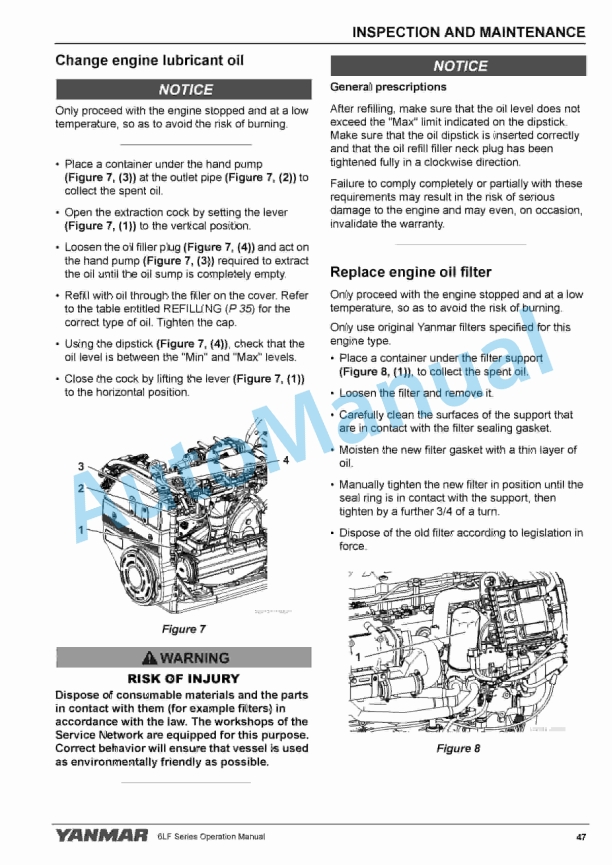
- 5.7.12. Change engine lubricant oil
- 5.7.13. Replace engine oil filter
- 5.8. Marinisation – Check
- 5.8.1. Check the filter at the seawater pump inlet (replace if necessary)
- 5.8.2. Fault memory reading via diagnostics tool
- 5.8.3. Check the state of wear of the seawater pump impeller (replace if necessary)
- 5.8.4. Check seawater cooling circuit pipes (clean if necessary)
- 5.8.5. Check the exchangers (clean if necessary)
- 5.8.6. Coolant/seawater heat exchanger
- 5.8.7. Seawater/oil heat exchanger
- 5.8.8. Intercooler exchanger (air/seawater)
- 5.8.9. Visually inspect turbocharger
- 5.8.10. Fuel filter change
- 5.8.11. Replacement of fuel pre-filter
- 5.8.12. Check drive belt
- 5.8.13. Draining condensate from the fuel tank
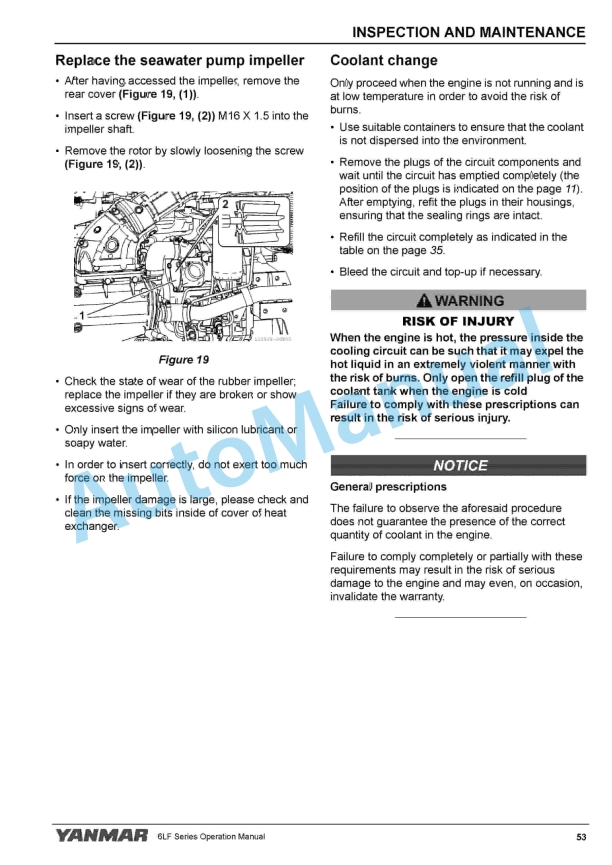
- 5.8.14. Replace the seawater pump impeller
- 5.8.15. Coolant change
- 5.8.16. Change auxiliary belt
- 5.8.17. Check integrity of damper flywheel
- 5.8.18. Check lifter clearances and adjust if necessary
- 5.8.19. Moving the engine
- 5.8.20. Disposal of waste
- 6. Long Period of Inactivity
- 6.1. Preparing the engine for a long period of inactivity
- 6.2. Start the engine after a long period of inactivity
- 7. Troubleshooting
- 7.1. Engine fault
- 7.2. Malfunction of the accelerator electronic circuit Fault in the accelerators electronic circuit
- 8. Behaviour in Emergency
- 8.1. On-board emergencies
- 8.1.1. Engine fault
- 8.1.2. Carbon monoxide (CO) poisoning
- 8.1.3. Electrocution
- 8.1.4. Injuries and fractures
- 8.1.5. Irritation
- 8.2. Table of oil viscosity as a function of the ambient working temperature of the engine
- 9. EPA Warranty USA Only
- 9.1. Identification Data
- 9.1.1. Your Warranty Rights and Obligations
- 9.1.2. Warranty Period
- 9.1.3. Warranty Coverage
- 9.1.4. Exclusions
- 9.1.5. Owners Responsibility
- 9.1.6. Customer Assistance
Rate this product
You may also like
Yanmar Operator Manual PDF
Yanmar 4CHE3, 6CHE3, 6CH-HTE3 Marine Propulsion Engine Operation Manual
$20.00
Yanmar Operator Manual PDF
$20.00
Yanmar Operator Manual PDF
$20.00
Yanmar Operator Manual PDF
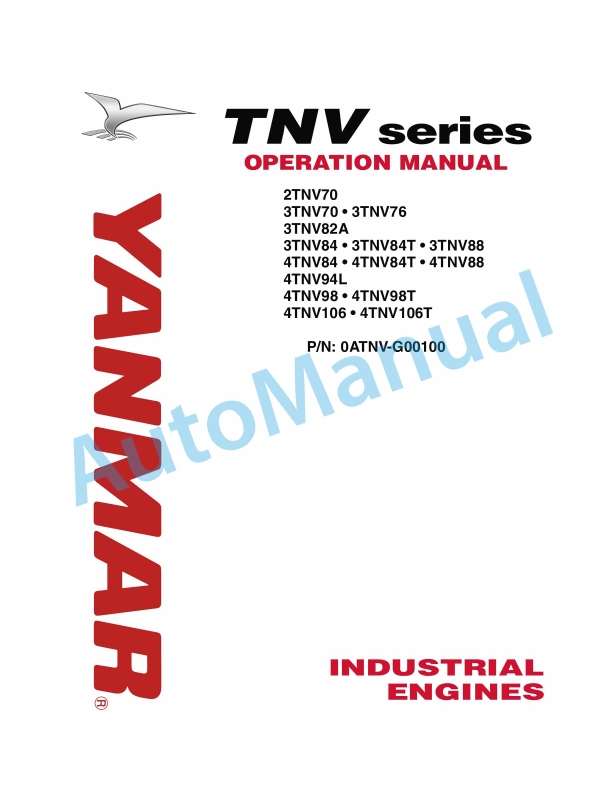
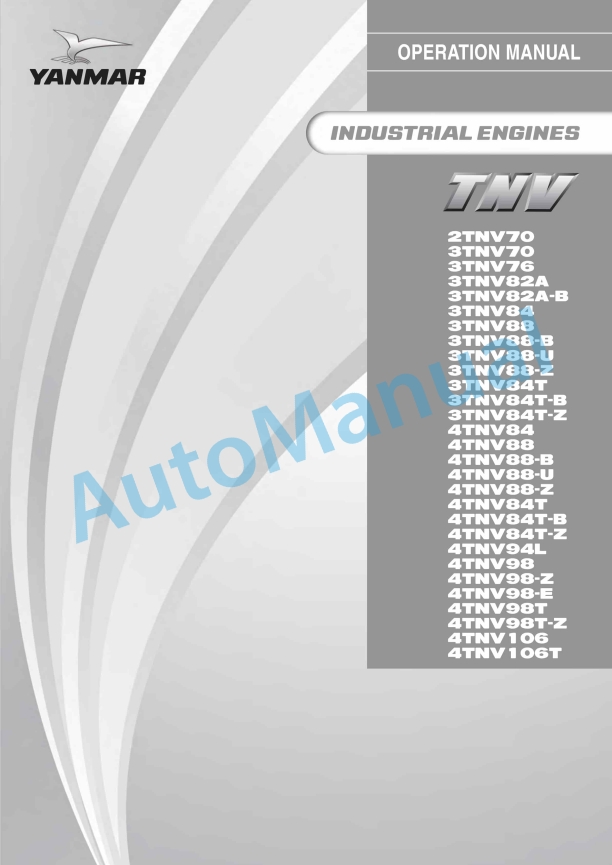
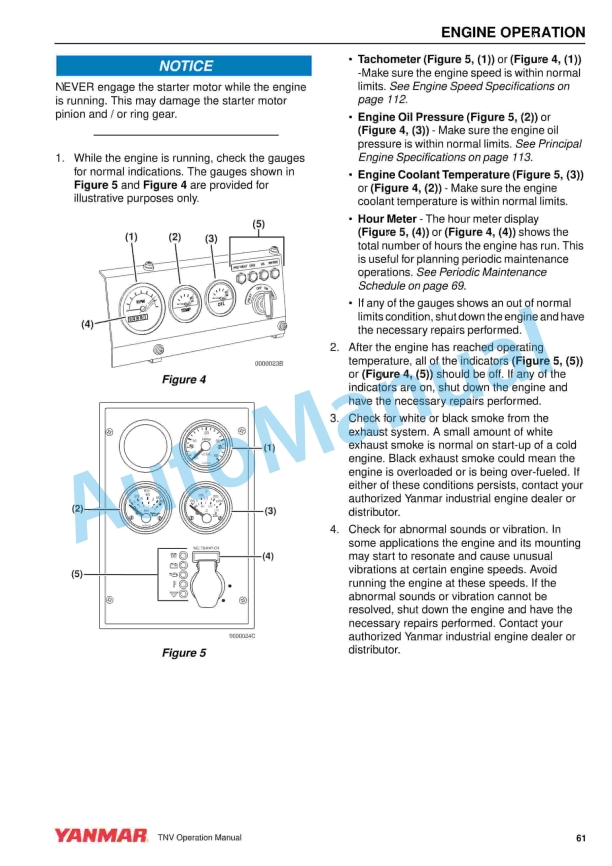
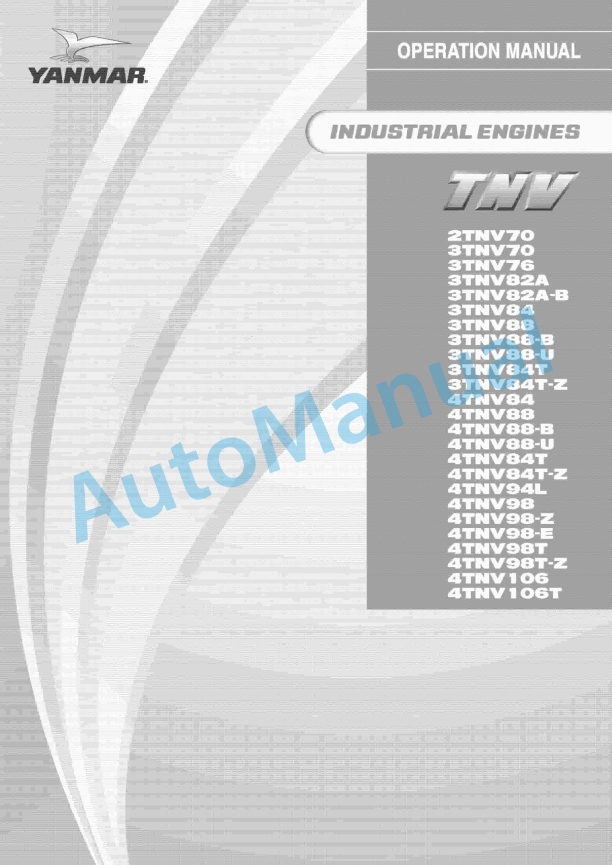
Yanmar 2TNV70 to 4TNV106T Industrial Engine Operation Manual 0ATNV-G00102
$20.00
Yanmar Operator Manual PDF
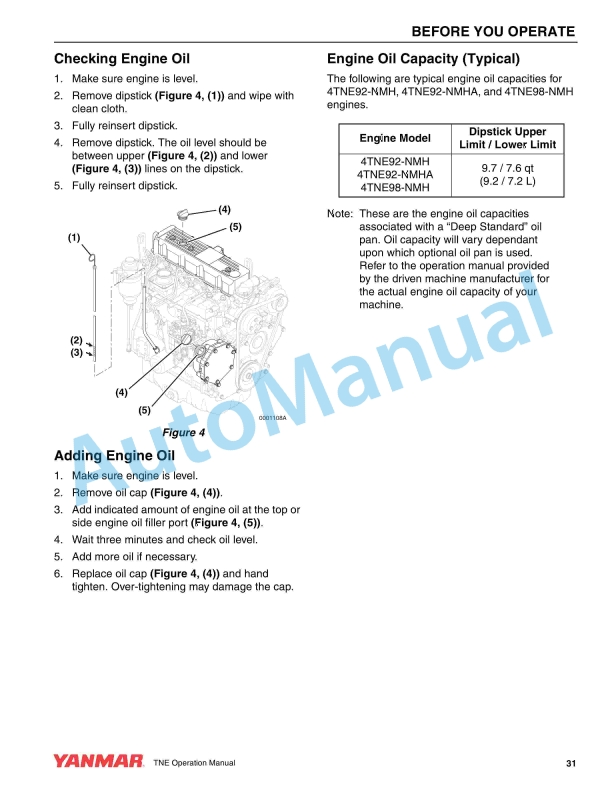
Yanmar 4TNE92, 4TNE94L, 4TNE98 Industrial Engine Operation Manual 0ATNE-G00102
$20.00
Yanmar Operator Manual PDF
$20.00
Yanmar Operator Manual PDF
Yanmar 4TNE92, 4TNE94L, 4TNE98 Industrial Engine Operation Manual 0ATNE-G00100
$20.00