
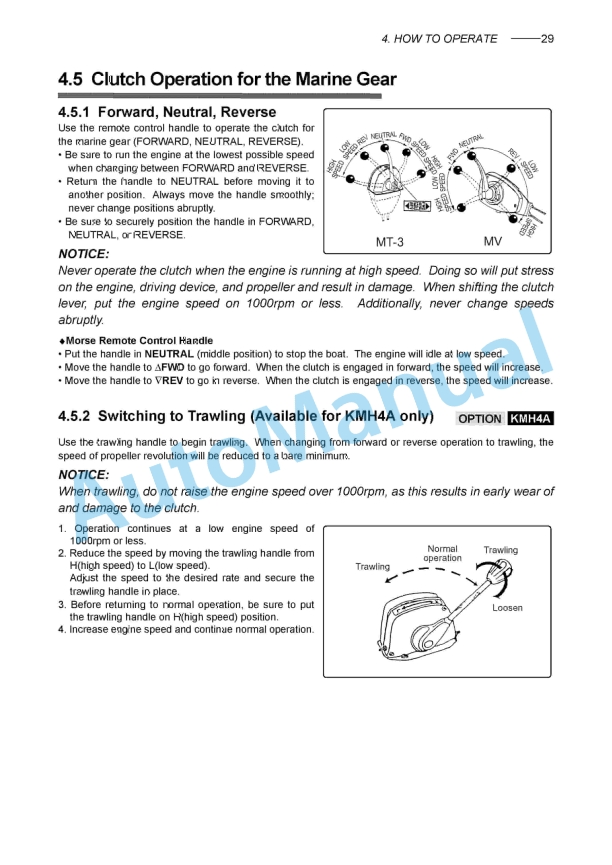
Yanmar ViO80-1A Hydraulic Excavator Operation And Maintenance Manual
$20.00
- Type Of Manual: Operation And Maintenance Manual
- Number of Pages: 222
- Size: 29.6MB
- Format: PDF
Category: Yanmar Operator Manual PDF
-
Model List:
- ViO80-1A Hydraulic Excavator
- 1. YANMAR CONSTRUCTION EQUIPMENT EUROPE S.A.S. THANK YOU FOR PURCHASING A YANMAR MACHINE
- 2. DECLARATION OF CONFORMITY
- 3. Reference information
- 4. Introduction
- 5. Safety signals
- 6. A Description and illustration of the machine
- 6.1. Applications and regulations
- 6.1.1. Applications
- 6.1.2. Warranty
- 6.1.3. Driving permits
- 6.1.4. Lifting
- 6.2. Identification plates
- 6.2.1. Machine serial number plate
- 6.2.2. Engine serial number plate
- 6.2.3. EPA information plate
- 6.2.4. Spare parts order and intervention request
- 6.3. Warning labels
- 6.3.1. Location of the warning adhesive labels
- 6.3.2. Explanation of the warning adhesive labels
- 6.4. Identification of important parts
- 6.4.1. General view of the machine
- 6.4.2. Commands and switches
- 6.5. Description of the driving position
- 6.5.1. Operator display station
- 6.5.1.1. Indicator lights
- 6.5.1.2. Clock
- 6.5.1.3. Time counter
- 6.5.1.4. Diesel gauge
- 6.5.1.5. Cooling fluid temperature indicator
- 6.5.1.6. Preheating light
- 6.5.1.7. Displaying the fuel consumption
- 6.5.1.8. Navigation keys
- 6.5.1.9. Information and error icons
- 6.5.2. Switches
- 6.5.2.1. Start key
- 6.5.2.2. Headlight switch
- 6.5.2.3. Horn
- 6.5.2.4. Windscreen wiper switch and windscreen wiper
- 6.5.2.5. Engine rate setting
- 6.5.2.6. Side movement switch
- 6.5.2.7. Engine slow down switch
- 6.5.2.8. Eco mode switch
- 6.5.2.9. Engine stop switch
- 6.5.2.10. Manual regeneration
- 6.5.2.11. Interior lighting switch
- 6.5.3. Joysticks and pedals
- 6.5.3.1. Locking lever
- 6.5.3.2. Right command lever
- 6.5.3.3. d hydraulic circuit control (P.T.O. 1)
- 6.5.3.4. Left command lever
- 6.5.3.5. h hydraulic circuit control (P.T.O. 2)
- 6.5.3.6. Travel levers and pedals
- 6.5.3.7. Blade lever
- 6.5.3.8. Protection of pedals
- 6.5.3.9. Boom rotation pedal
- 6.5.4. Power socket
- 6.5.5. Drivers seat
- 6.5.6. Location for the tools and user manual
- 6.5.6.1. Toolkit
- 6.5.6.2. User manual
- 6.5.7. Fuses
- 6.5.7.1. Fusebox
- 6.5.8. Cabin
- 6.5.8.1. Cab side door
- 6.5.8.2. Upper windscreen
- 6.5.8.3. Lower windscreen
- 6.5.8.4. Right hand cab window
- 6.5.9. Headlights
- 6.6. Operation of the air conditioning
- 6.7. Covers
- 6.7.1. Bonnet
- 6.7.2. Cover B
- 6.7.3. Cover R
- 6.8. Using the electric fuel filling pump
- 6.9. Options
- 6.9.1. Long arm
- 6.9.2. Additional counterweights
- 6.9.3. Lifting Kit
- 6.9.3.1. Lifting ring
- 6.9.3.2. Safety valves
- 6.9.3.3. Overload box
- 6.9.3.4. Lifting Tables
- 6.9.4. FOPS 2 protection grill for demolition work
- 6.9.5. Plug-in flashing light
- 6.9.6. Keypad immobilizer
- 6.9.7. Immobilizer with coded key
- 6.9.8. Anti-starter with key
- 6.9.9. Fleet management system
- 6.9.10. SMART-ASSIST
- 6.9.11. Radio
- 6.9.12. Quick hitch
- 6.9.13. Centralized greasing system
- 6.9.14. Continuous pressure hydraulic line
- 6.9.15. Mechanical quick hitch
- 6.9.15.1. Mechanical quick hitch RETROMATIC MORIN
- 6.9.15.2. Mechanical quick hitch CSERI
- 6.9.16. Quick hydraulic hitch CSERI
- 6.9.16.1. Dismantling the accessory
- 6.9.16.2. Mounting the accessory
- 7. B Operating instructions
- 7.1. Basic precautions
- 7.1.1. Comply with your workplaces safety rules
- 7.1.2. Put the safety mechanisms in place
- 7.1.3. Wear suitable clothing and protective equipment
- 7.1.4. Do not drive under the influence of alcohol, drugs or medication
- 7.1.5. Provide adequate ventilation when working in an enclosed space
- 7.1.6. Protect plants from hot air and exhaust fumes
- 7.1.7. Keep fuel and oil away from sparks
- 7.1.8. Avoid removing the caps when the temperatures are high
- 7.1.9. Avoid crush injuries due to accessories
- 7.1.10. Have an extinguisher and a first aid kit
- 7.1.11. Avoid any unauthorised modifications
- 7.1.12. Precautions for optional parts and tools
- 7.1.13. Warning concerning the cab windows
- 7.1.14. Cabins emergency exit
- 7.1.15. Air conditioning system
- 7.2. Usage precautions
- 7.2.1. Precautions before starting the engine
- 7.2.1.1. Make sure that your workplace is safe
- 7.2.1.2. Clean the machine
- 7.2.1.3. Check the safety structures
- 7.2.1.4. Check the position of the blade
- 7.2.1.5. Accessing the machine
- 7.2.1.6. Fasten your safety belt and adjust the rearview mirror(s)
- 7.2.2. Movement precautions
- 7.2.2.1. Machines Danger Zone
- 7.2.2.2. Movement and accessories
- 7.2.2.3. Driving the machine on a slope
- 7.2.3. Working precautions
- 7.2.3.1. Precautions for using the equipment
- 7.2.3.2. Dangerous tasks
- 7.2.3.3. Working near electricity lines
- 7.2.3.4. Working near obstacles
- 7.2.3.5. Emergency stop and securing the machine
- 7.2.3.6. Working on a slope
- 7.2.3.7. Working in an area covered with snow
- 7.2.3.8. Working on unstable ground
- 7.2.3.9. Working in a submerged area
- 7.2.3.10. Working in a muddy area
- 7.2.3.11. Working in an area with reduced visibility
- 7.2.4. Parking precautions
- 7.2.5. Precautions for the accessories
- 7.2.6. Precautions for using optional accessories
- 7.2.7. Precautions for the battery
- 7.3. Precautions for the engine
- 7.4. Checks before starting the machine
- 7.4.1. Overall visual inspection
- 7.4.2. Checking and topping up the level of cooling fluid
- 7.4.3. Checking and topping up the engine oil level
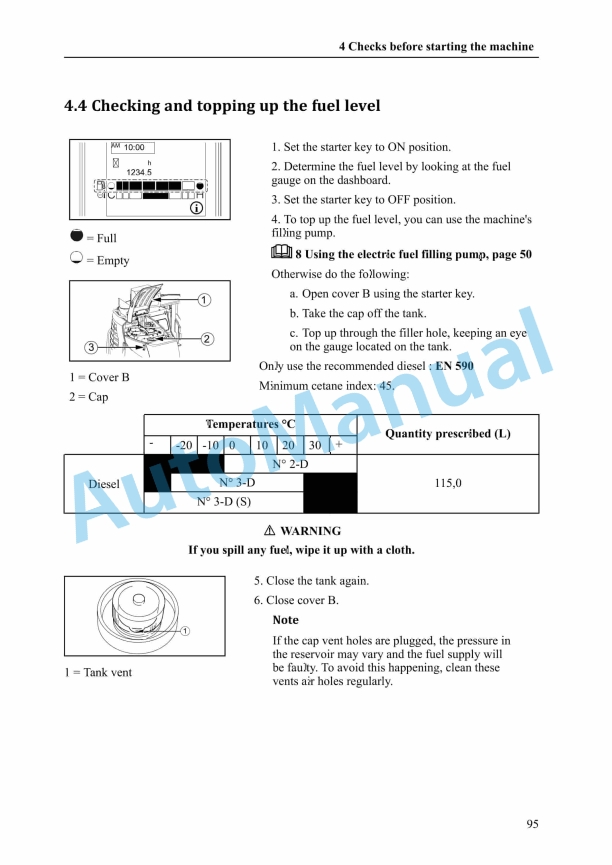
- 7.4.4. Checking and topping up the fuel level
- 7.4.5. Checking and topping up the hydraulic oil level
- 7.5. Checks after start-up
- 7.6. Checks after use
- 7.7. Operator LCD display station interfaces
- 7.7.1. Indication of functions
- 7.7.2. User Interface
- 7.7.3. Maintenance interface
- 7.7.4. Machine usage management interface
- 7.7.5. Configuration interface
- 7.8. Using the machine in cold weather
- 7.8.1. Preparation for use in cold weather
- 7.8.2. Starting in cold weather
- 7.8.3. Precautions after use
- 7.8.4. When cold weather is over
- 7.9. Rubber tracks
- 7.9.1. Correct use of rubber tracks
- 7.9.2. Rubber track warranty
- 7.9.3. Precautions for using rubber tracks
- 7.9.4. Track maintenance
- 7.9.5. Track replacement
- 7.10. Handling the bucket
- 7.10.1. Machine stability when using with a bucket or an accessory
- 7.10.2. Compatible accessories
- 7.10.3. Operation of the retro bucket
- 7.10.4. Digging trenches
- 7.10.5. Loading
- 7.11. Handling of accessories
- 7.11.1. Hydraulic hammer SOCOMEC
- 7.12. Accessory change by direct coupling
- 7.12.1. Dismantling the accessory
- 7.12.2. Mounting the accessory
- 7.12.2.1. Loading bucket
- 7.13. Load lifting
- 7.14. Implementing the 3rd hydraulic circuit
- 7.14.1. Description
- 7.14.1.1. d circuit selector
- 7.14.2. Mounting the accessory
- 7.14.3. Precautions for using the accessory
- 7.15. Using the particle filter
- 7.15.1. Auto-regeneration
- 7.15.2. Assisted regeneration
- 7.15.3. Launching the regeneration
- 7.15.4. Manual regeneration of the particulate filter
- 7.16. Transporting the machine
- 7.16.1. Loading/unloading the machine
- 7.16.1.1. Precautions for loading/unloading the machine
- 7.16.1.2. Procedure
- 7.16.2. Immobilising the machine on the truck
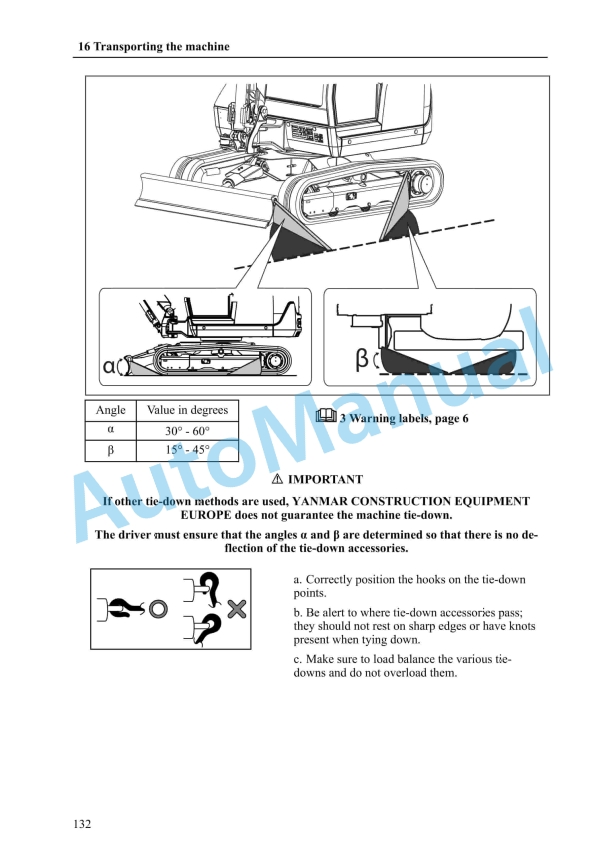
- 7.16.3. Tying down the machine
- 7.16.4. Slinging the machine
- 7.17. Detecting anomalies
- 7.17.1. Phenomena that do not constitute faults
- 7.17.2. Detecting anomalies
- 7.17.2.1. Engine
- 7.17.2.2. Electrical equipment
- 7.17.2.3. Machine structure
- 7.18. If the battery is discharged
- 7.18.1. Precautions for connecting and disconnecting the starter cables
- 7.18.2. Connecting the starter cables
- 7.18.3. Starting the engine
- 7.18.4. Disconnecting the starter cables
- 7.18.5. Charging the battery
- 7.19. Towing the machine
- 8. C Periodic maintenance programme
- 8.1. Periodic inspections and upkeeps
- 8.2. Maintenance precautions
- 8.2.1. Precautions before maintenance
- 8.2.1.1. Removing the residual pressure
- 8.2.1.2. Place a warning label
- 8.2.1.3. Establish a safety perimeter
- 8.2.1.4. Keep the machine clean
- 8.2.2. Precautions during maintenance
- 8.2.2.1. Oil and grease
- 8.2.2.2. Tools
- 8.2.2.3. Parts
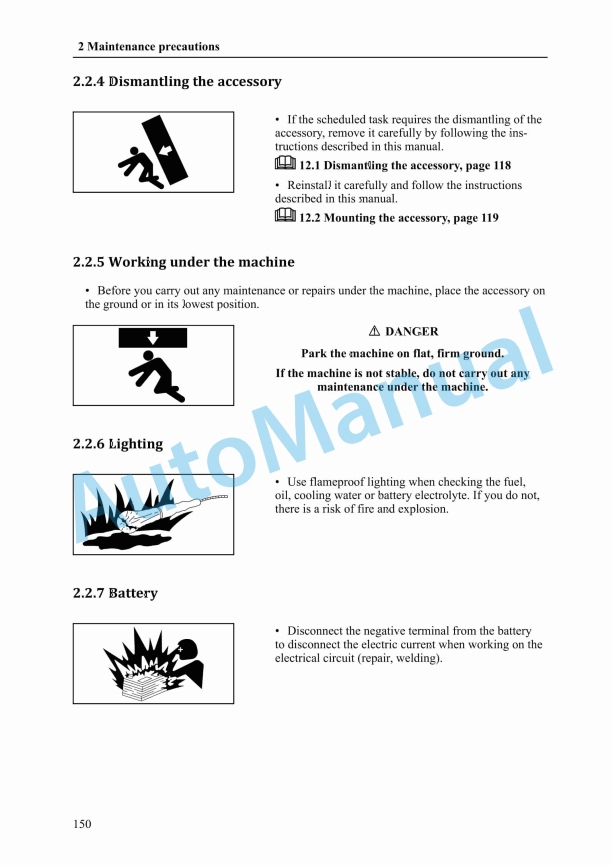
- 8.2.2.4. Dismantling the accessory
- 8.2.2.5. Working under the machine
- 8.2.2.6. Lighting
- 8.2.2.7. Battery
- 8.2.2.8. Hoses
- 8.2.2.9. Radiator ventilator
- 8.2.2.10. Soldering
- 8.2.2.11. Waste processing
- 8.3. Recommended greases and fluids
- 8.4. First maintenance
- 8.4.1. After the first 50 hours of service
- 8.5. List of periodic inspections and maintenance operations
- 8.6. Maintenance by the operator
- 8.6.1. Daily maintenance
- 8.6.1.1. Checking the machine before use
- 8.6.1.2. Checks after using the machine
- 8.6.1.3. Checking the commands
- 8.6.1.4. Checking the seat
- 8.6.1.5. Greasing points
- 8.6.1.6. Using the centralized greasing system
- 8.6.1.7. Cleaning the separator/decanter
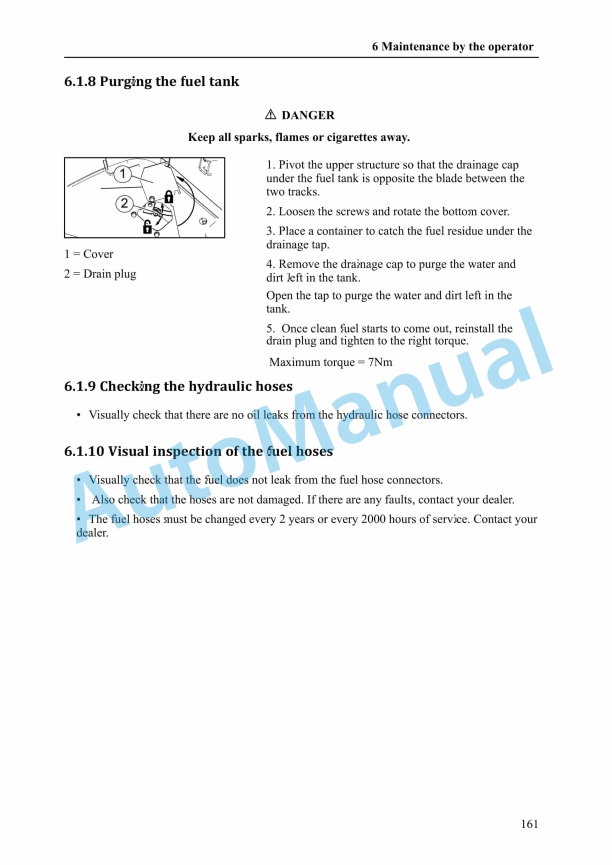
- 8.6.1.8. Purging the fuel tank
- 8.6.1.9. Checking the hydraulic hoses
- 8.6.1.10. Visual inspection of the fuel hoses
- 8.6.2. Maintenance every 50 hours
- 8.6.2.1. Greasing the pin and rotation crown
- 8.6.3. Maintenance every 15 days
- 8.6.3.1. Checking the air conditioning/heating system
- 8.6.4. Non periodic maintenance
- 8.6.4.1. Fuse replacement
- 8.6.4.2. Replacing a bulb
- 8.6.4.3. Top up the windscreen washer fluid
- 8.6.4.4. Replacing the windscreen wiper
- 8.6.4.5. Accessory state check
- 8.6.5. Rubber track maintenance
- 8.6.5.1. Checking the condition of the tracks
- 8.6.5.2. Track replacement
- 8.6.5.3. Tension check
- 8.6.5.4. Increasing the tension
- 8.6.5.5. Releasing the tension
- 8.6.6. Steel track maintenance
- 8.6.6.1. Checking the condition of the tracks
- 8.6.6.2. Track replacement
- 8.6.6.3. Tension check
- 8.6.6.4. Increasing the tension
- 8.6.6.5. Releasing the tension
- 8.7. Maintenance by the dealer
- 8.7.1. Maintenance of the particle filter
- 9. D Conservation and storage
- 9.1. Conservation
- 9.2. Storage
- 9.3. Recommissioning
- 10. E Technical data
- 10.1. Specifications
- 10.2. Working dimensions
- 10.3. Noise emitted by the machine
- 10.4. Vibrations emitted by the machine
- 11. F Lifting capacities
- 11.1. Lifting ViO80-1A
- 11.2. Lifting ViO801A with rear counterweight
- 12. Appendices
- 12.1. A List of error codes displayed on the operator display station
- 12.2. B Control sheets to be photocopied
- 12.3. C Notes
- 12.4. D Lashing record
Rate this product
You may also like
Yanmar Operator Manual PDF
Yanmar 4JH3-TE, 4JH3-TCE, 4JH3-HTE, 4JH3-DTE Marine Diesel Engine Operation Manual
$20.00
Yanmar Operator Manual PDF
Yanmar 4CHL-N, 4CHL-TN, 6CHL-N, 6CHL-TN, 6CHL-HTN Marine Auxiliary Engine Operation Manual
$20.00
Yanmar Operator Manual PDF
Yanmar 4TNE92, 4TNE94L, 4TNE98 Industrial Engine Operation Manual 0ATNE-G00102
$20.00
Yanmar Operator Manual PDF
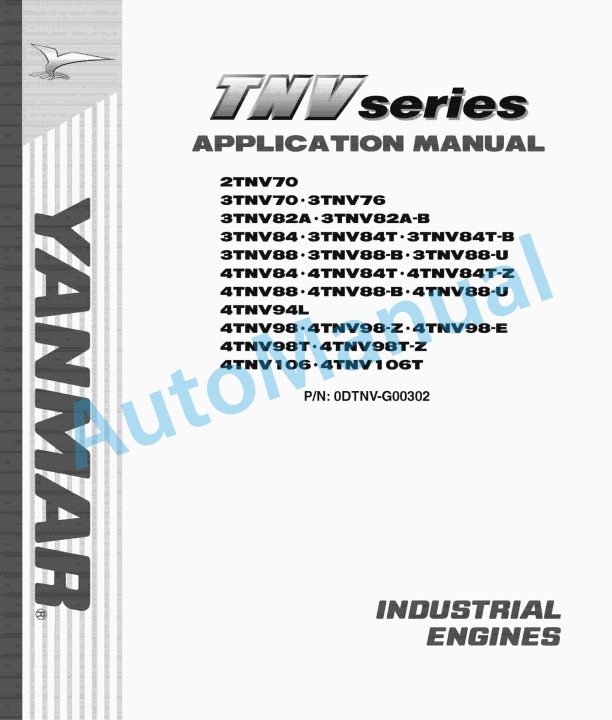
Yanmar 2TNV70 to 4TNV106T Industrial Engine Operation Manual 0ATNV-G00101
$20.00
Yanmar Operator Manual PDF
$20.00
Yanmar Operator Manual PDF
$20.00
Yanmar Operator Manual PDF
Yanmar 4LHA-HT(Z)P, 4LHA-DT(Z)P, 4LHA-ST(Z)P Marine Diesel Engine Operation Manual
$20.00